 As of January 25, 2010 Textbook Equity website is live. Though there are still hundreds of hours of work remaining, such as open textbook processing, and incorporation of the collaboration tools, interested students, authors, administrators, and publishers may scan and comment on the textbook research. We pat ourselves on the back.
All posts by quasarquark
Anatomy of a Textbook: Part I – Top 100 Textbooks on Amazon.com
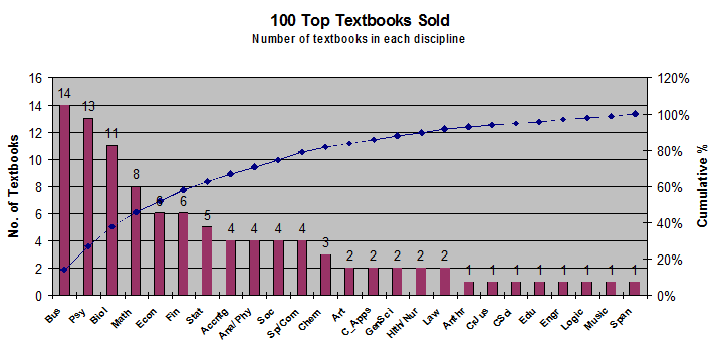
In attempting to answer the questions, “Are textbooks really too expensive?” and “What should they cost”, we analyzed Amazon.com’s top 100 textbooks sold in the spring of 2010, and discovered some interesting patterns along the way. Here are our preliminary observations: (More charts and graphs available for download at the end of this post.)
- The #1 selling textbook is in Biology, #50 is a Calculus book, and #100 is in Psychology.
- When looking at the number of textbooks in the top 100 by discipline the rankings are:
- Business(#1)
- Psychology (#2)
- Biology (#3)
- Interestingly enough, those three subjects add up to 39% of the top 100. Add in math and you have 47% of the textbooks in four subjects.
- Half of the 14 Business textbooks are in Marketing.
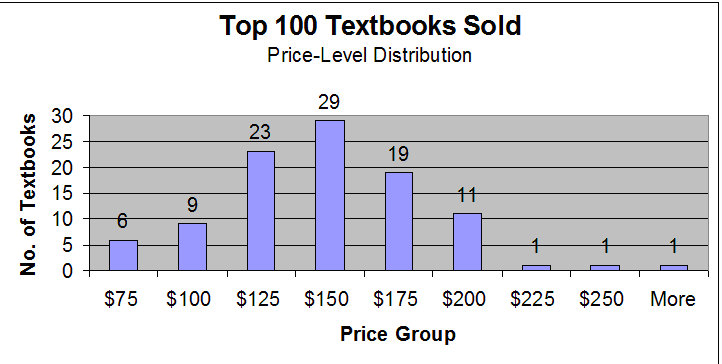
- The top 100 textbooks cost an average of $135, ranging from $65 to $256, σ ~$34. The median is $133.
- The most expensive textbook is in Chemistry ($256), the least expensive Industrial Organization ($35). However, based on average cost per discipline the most expensive textbooks are:
- Law ($205)
- Engineering ($195)
- Chemistry ($182)
- Accounting ($177)
- The range of prices by subject varies considerably. The average range of all the disciplines is $41. Nine disciplines have average ranges that are 50% higher than the lowest priced book. These are ($min – $max price):
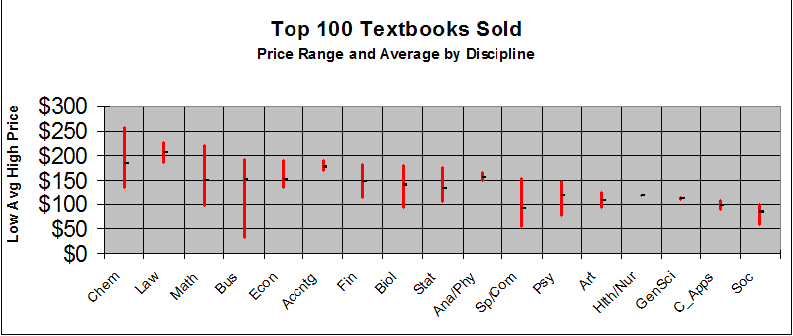
- Chemistry ($134 – $256)
- Math ($97 – $221)
- Finance ($115 – $180)
- Business ($35 – $193)
- Biology ($96 – $178)
- Statistics ($105 – $177)
- Psychology ($79 – $146)
- Speech/Communication ($53 – $154)
- Sociology ($59 – $101)
- The price per page ranges from $0.09 to $0.29, averaging $.18.
- Each textbook, on average, is 789 pages, weighs 4 pounds, and occupies 109 cubic inches of space. (Cube root ~4.781 inches.)
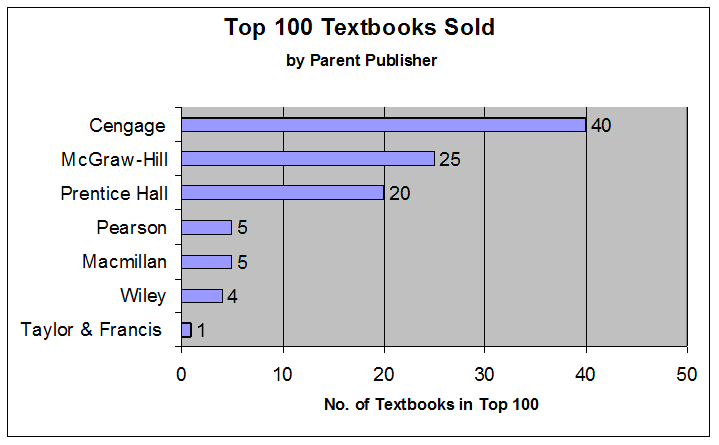
- There are 13 listed publishers of the 100 textbooks. When combined into their parent company, there are only five publishers, and the top three account for 85% of the top 100 textbook sales. Are there implications for the Justice Department’s Antitrust Division?
The full report contain introductory remarks, 12 graphs preliminary conclusions, and references: Anatomy of a Textbook Part I (pdf).
How would others describe your work?
How would others describe your work? The following words and phrases are from actual reviews on various types of textbooks. Some of them are airy and flowery, others are truly informational.
“. . . clear glossary. . .”
“. . . clear, unified structure for analyzing theories and empirical evidence. . .”
“. . . really valuable resource. . .”
“. . . abundant learning aids and exercises. . .”
“. . . accessible. . .”
“. . . clear layout allows the reader to access the material easily. . .”
“. . . clearly structured. . .”
“. . . combining balanced coverage of theory with current research findings. . .”
“. . . covering all the substantive topics. . .”
“. . . each chapter is divided into a main text and supplementary section containing more advanced material. . .”
“. . . engaging. . .”
“. . . excellent. . .”
“. . . exercises coded to indicate level of difficulty. . .”
“. . . focus on the core issues in (sociology). . .”
“. . . formal in its approach. . .”
“. . . fresh internal design. . .”
“. . . fully updated to reflect new trends and topics. . .”
“. . . good value for [the] money. . .”
“. . . his masterful synthesis of. . .”
“. . . impressive and well written. . .”
“. . . informative. . .”
“. . . issue-driven introduction. . .”
“. . . learn how to apply this information. . .”
“. . . lively range of activities and discussion points. . .”
“. . . new material is to be found throughout. . .”
“. . . offers a comprehensive examination of the field. . .”
“. . . presenting (the subject) as an exciting and relevant topic to students of all ages, interests and abilities. . .”
“. . . provide a more challenging and relevant option for instructors and students. . .”
“. . . provides students with a comprehensive, up-to-date presentation of (sociology). . .”
“. . . relevant examples. . .”
“. . . removes ethnocentric blinders. . .”
“. . . student-friendly cartoons, tables, diagrams and photographs. . .”
“. . . students can relate to. . .”
“. . . summaries of key issues. . .”
“. . . surprisingly accessible. . .”
“. . . technically precise and thorough. . .”
“. . . provides an easy-to-follow and thoughtful introduction. . .”
“. . . coverage of topics is complete and up to date. . .”
“. . . just gets better and better. . .”
“. . . will fill a tremendous void. . .”
“. . . uniquely uses the tools of. . .”
“. . . useful web references. . .”
“. . . vast array of examples. . .”
“. . . well-organized. . .”
“. . . written by two of the field’s most respected researchers. . .”
1st Place in Service Sector Business Plan Competition
 Dateline: Santa Clara, California
Textbook Equity’s business plan, which outlines a sustainable business model for supplying open textbook to community college students, won first place (shared) in the services sector business plan competition. The business plan, the result of six months of the intense entrepreneurial “boot camp” at Santa Clara University’s California Program for Entrepreneurship, highlighted the major changes in the cost structure of publishing industry. Unique ideas in the business plan includes open content, performance rebates to students, and royalties to open content authors. Essential to a sustainable business model are maintaining quality and version control, ease of access, outputs in digital and print formats, and adoptability.
Labor hours needed to create a textbook
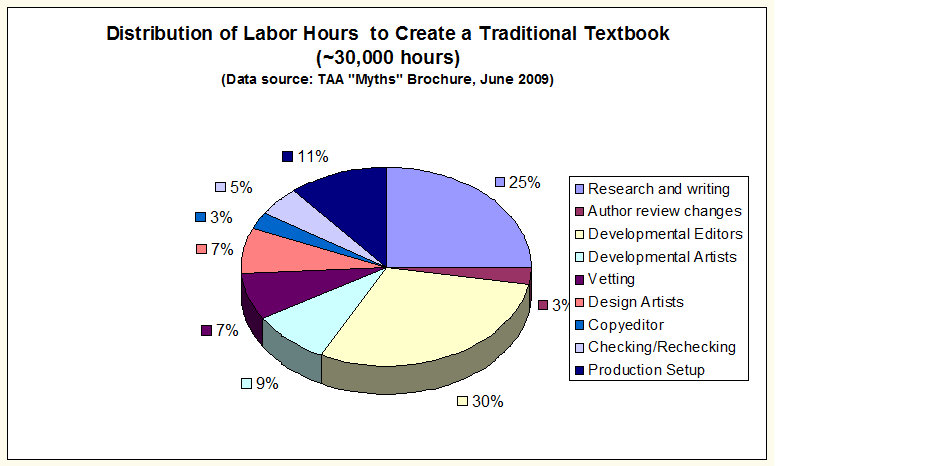 According to the Text and Academic Author’s Association (TAA), it takes approximately 30,000 hours to create and print a standard textbook.